
There’s a particular kind of tired that seems to show up in midlife.
You start the day feeling reasonably good. You’ve had breakfast, you’re getting things done, perhaps you’ve even managed a walk—and then somewhere around 2 or 3 o’clock, your energy seems to pack its bags and leave without telling you where it’s going. 😂
Suddenly another cup of coffee sounds very appealing. So does something sweet. And honestly, so does crawling under a blanket and pretending the rest of the day has been cancelled.
Sound familiar?
Energy changes during perimenopause, menopause and beyond can be complicated. Hormonal changes may play a role, but so can sleep, stress, activity levels, medications, health conditions, mental load—and, of course, how we’re nourishing ourselves.
That’s why I don’t love the idea of blaming every tired day on menopause.
But I also don’t think we should ignore the role food can play in helping us feel more nourished and satisfied throughout the day.
And thankfully, supporting ourselves nutritionally doesn’t mean eliminating every carbohydrate, living on salads or following another complicated list of foods women over 40 supposedly aren’t allowed to eat.
In fact, some of my favorite foods for this time of year are wonderfully comforting carbohydrates.
So, since we’re doing an October Energy Edit, let’s take that edit into the kitchen and look at seven delicious fall foods that can help us build balanced, satisfying meals.
1. Pumpkin & Winter Squash
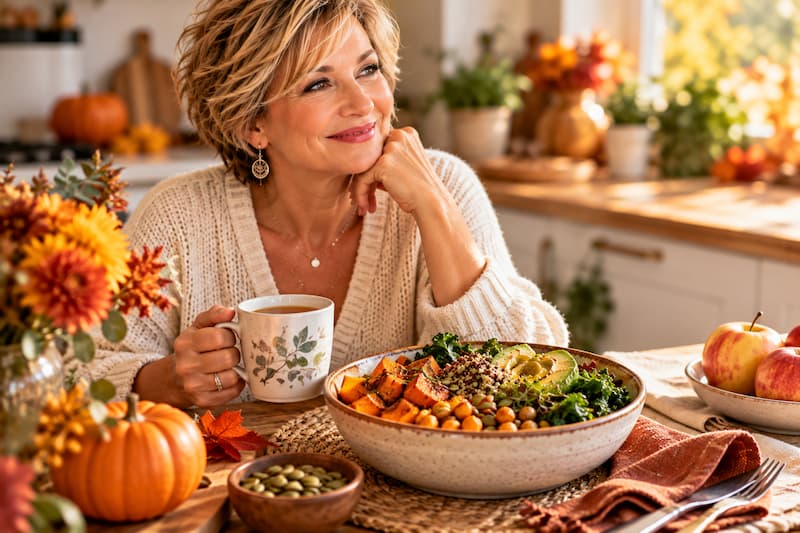
Pumpkin gets a lot of attention this time of year—although, admittedly, much of that attention involves pie and coffee. 😂
But pumpkin, butternut squash, acorn squash and other winter squashes are wonderfully versatile whole foods.
They provide fiber along with carotenoids and other vitamins and minerals, and their natural carbohydrate content makes them a lovely addition to a balanced fall meal.
Roast cubes of squash and add them to a grain bowl. Stir pumpkin into oatmeal. Blend butternut squash into soup. Add roasted squash to salads or serve it alongside chicken, fish, lentils or beans.
And don’t forget the seeds. Pumpkin seeds can add healthy fats, protein, fiber and minerals while also giving meals a satisfying little crunch.
One of the things I especially love about winter squash is that it feels like comfort food without requiring us to turn comfort into something we need to feel guilty about.
Food can nourish us and feel cozy.
Those two things are absolutely allowed to coexist.
2. Sweet Potatoes
Sweet potatoes are another fall favorite that sometimes gets caught up in our collective fear of carbohydrates.
Can we please stop being frightened of the sweet potato? 😂
Sweet potatoes provide complex carbohydrates, fiber and nutrients including beta-carotene.
And carbohydrates aren’t automatically the enemy of energy.
Our bodies use carbohydrate as an important source of fuel. What can make a difference is the type of carbohydrate, the overall meal and what we pair it with.
Instead of eating a sweet potato by itself and calling it lunch, try pairing it with protein, vegetables and healthy fat.
For example:
- A roasted sweet potato topped with black beans, greens and avocado.
- Or roasted sweet potato alongside salmon and broccoli.
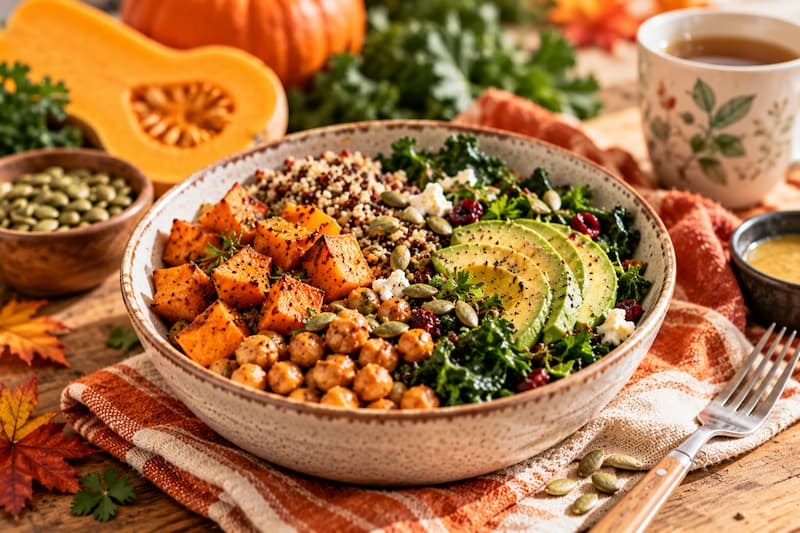
- Or add cubes to a warm grain bowl with chickpeas, kale, pumpkin seeds and a flavorful dressing.
Now we’ve moved from “a carb” to a nourishing meal.
3. Lentils & Beans
If you’ve followed me for any length of time, you probably knew beans and lentils were going to make an appearance somewhere. 😉
They’re affordable, versatile and wonderfully useful for creating satisfying meals.
Lentils and beans provide both plant protein and fiber-rich carbohydrate, which makes them especially helpful when we’re trying to build meals that keep us satisfied.
They’re also perfect for fall cooking.
Think lentil soup with vegetables and greens.
White beans stirred into a pumpkin or butternut squash soup.
Black beans with roasted sweet potato.
Chickpeas tossed into a warm fall salad or grain bowl.
You don’t have to make legumes the entire meal, either. Even adding half a cup to soup, salad or a bowl can boost its fiber and make it more substantial.
And because canned beans are perfectly useful, this does not have to involve soaking something overnight and remembering what you did with it the next morning. 😂
Rinse, drain, add. I’m a big fan of realistic wellness.
4. Apples & Pears
There’s something about apples in October that just feels right. 🍎
Apples and pears are convenient sources of carbohydrate and fiber, and they make an easy seasonal snack.
But here’s one small change that can make that snack more satisfying:
Give your fruit a friend.
Instead of eating an apple by itself when you’re already hungry, try pairing it with something containing protein or healthy fat.
- An apple with almond or peanut butter.
- Pear slices with cheese.
- Apple added to Greek yogurt with walnuts.
- Chopped pear over oatmeal with pumpkin seeds.
That little bit of pairing can turn a quick piece of fruit into something that feels much more substantial.
It also illustrates something I want you to notice throughout this article:
We’re not constantly asking what we need to take away.
We’re asking what we can add.
5. Oats & Other Whole Grains
Let’s continue our rehabilitation of carbohydrates. 😂
Oats, quinoa, barley, brown rice and other whole grains can absolutely have a place in a nourishing midlife diet.
They provide carbohydrate, fiber and a variety of nutrients, and they can be particularly useful when paired with protein and healthy fat.
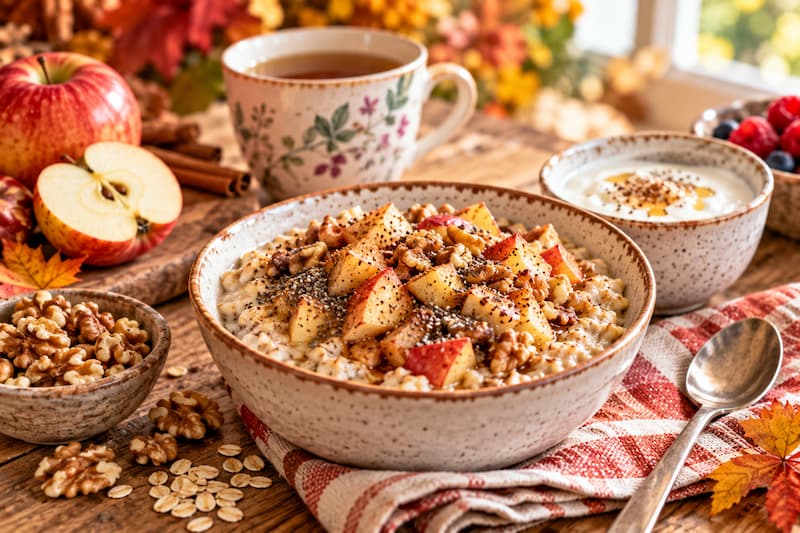
For breakfast, that might look like oatmeal topped with berries or apples, walnuts, chia seeds and Greek yogurt.
For lunch or dinner, perhaps quinoa or barley becomes the base of a bowl filled with roasted vegetables, greens, lentils or chicken and a drizzle of olive oil.
Whole grains aren’t magical.
But neither are they something we automatically need to eliminate simply because we’ve reached a certain birthday.
The goal is to look at the whole meal, rather than putting individual foods into “good” and “bad” categories.
6. Leafy Greens
I know. Somewhere along the way, wellness culture managed to make “eat your greens” sound like a punishment. 😂
But leafy greens don’t have to mean sitting in front of an enormous bowl of lettuce while wishing you were eating something else.
Spinach, kale, Swiss chard and other greens provide fiber along with folate, magnesium and a variety of vitamins and beneficial plant compounds.
And they’re incredibly easy to add to foods you’re already eating.
- Stir spinach or kale into soup.
- Add greens to an omelet.
- Toss them into a grain bowl.
- Sauté them with garlic and olive oil.
- Blend a handful into a smoothie if that’s something you enjoy.
The point isn’t to force down greens because they’re “healthy.”
It’s to find ways of eating them that you actually like.
Because the most nutritious food in the world isn’t terribly useful if you hate it so much that you never eat it.
7. Nuts and Seeds
Walnuts, almonds, pumpkin seeds, chia seeds and ground flaxseed may be small, but they’re an easy way to add healthy fats, fiber, protein and important minerals to meals and snacks.
- Sprinkle pumpkin seeds over soup.
- Add walnuts to oatmeal.
- Stir chia or ground flax into yogurt.
- Pair almonds with fruit.
- Add seeds to a salad or grain bowl.
These little additions can also make a meal feel more satisfying—which matters.
Feeling satisfied after eating isn’t something we need to avoid.
In fact, constantly finishing a meal feeling as though we barely ate can leave us wandering back into the kitchen shortly afterward looking for… well, something. 😂
A nourishing meal should actually nourish you.
The Real Secret Isn’t One Superfood
If you’ve been reading through this list looking for the one food that’s going to magically give you endless energy, I’m afraid I’m going to disappoint you.
There isn’t one.
Pumpkin isn’t magical.
Neither are lentils.
And adding chia seeds to something doesn’t suddenly turn it into a wellness potion. 😉
What matters much more is the overall pattern of how we nourish ourselves.
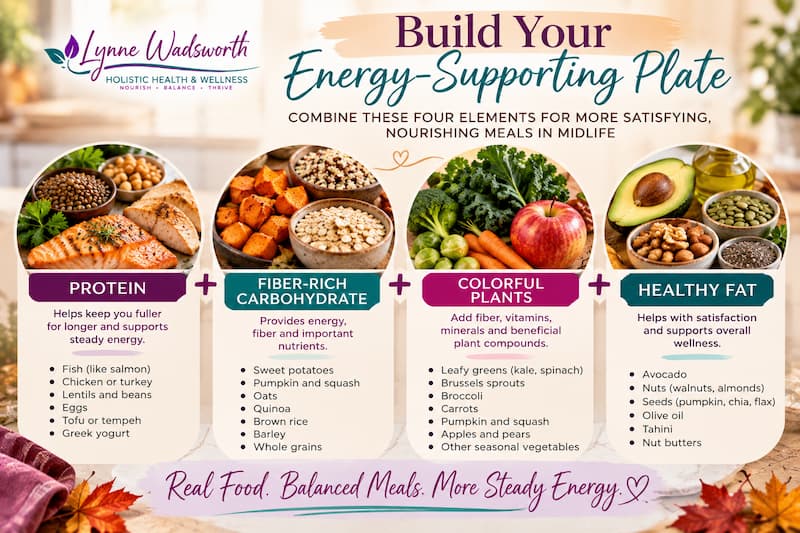
One simple way to think about a satisfying meal is to include these four elements:
Protein + Fiber-Rich Carbohydrate + Colorful Plants + Healthy Fat
That might look like:
Salmon + sweet potato + broccoli + olive oil
Lentils + quinoa + roasted vegetables + pumpkin seeds
Greek yogurt + oats + apples + walnuts
Chicken + brown rice + leafy greens + avocado
It doesn’t have to be exact.
You don’t need to weigh it, track it or arrange everything into perfect little sections on your plate.
And every meal doesn’t have to look like it belongs on Instagram.
Sometimes dinner is leftovers eaten out of a container while standing in the kitchen.
Life happens. 😂
The formula is simply a helpful way to ask:
“Is there something I could add here that would make this meal more nourishing and satisfying?”
That question feels very different from:
“What should I stop eating?”
And that’s a shift I would love more women to make in midlife.
Think Addition Before Restriction
Women reach midlife carrying an extraordinary number of food rules.
- Don’t eat carbs.
- Don’t eat after a certain hour.
- Don’t eat fruit because it contains sugar.
- Don’t eat fat.
- Actually, eat more fat.
- Fast longer.
- Eat less.
- Track everything.
No wonder we’re exhausted. We need a spreadsheet just to make lunch. 😂
Instead, try beginning with nourishment.
If breakfast is mostly carbohydrate, perhaps add some protein.
If lunch is a salad that leaves you hungry an hour later, perhaps it needs protein, healthy fat or a fiber-rich carbohydrate.
If your afternoon snack is an apple, perhaps add a handful of walnuts.
If dinner is soup, perhaps beans, lentils, chicken or whole-grain bread would make it more satisfying.
Small additions can completely change the quality of a meal without requiring you to overhaul everything you’re eating.
Let Fall Food Work in Your Favor
One reason I love seasonal eating is that nature does some of the planning for us.
Autumn gives us squash, pumpkin, sweet potatoes, apples, pears and hearty greens.
Cooler weather makes soups, stews, oatmeal and warm grain bowls appealing again.
And many of these foods naturally work beautifully together.
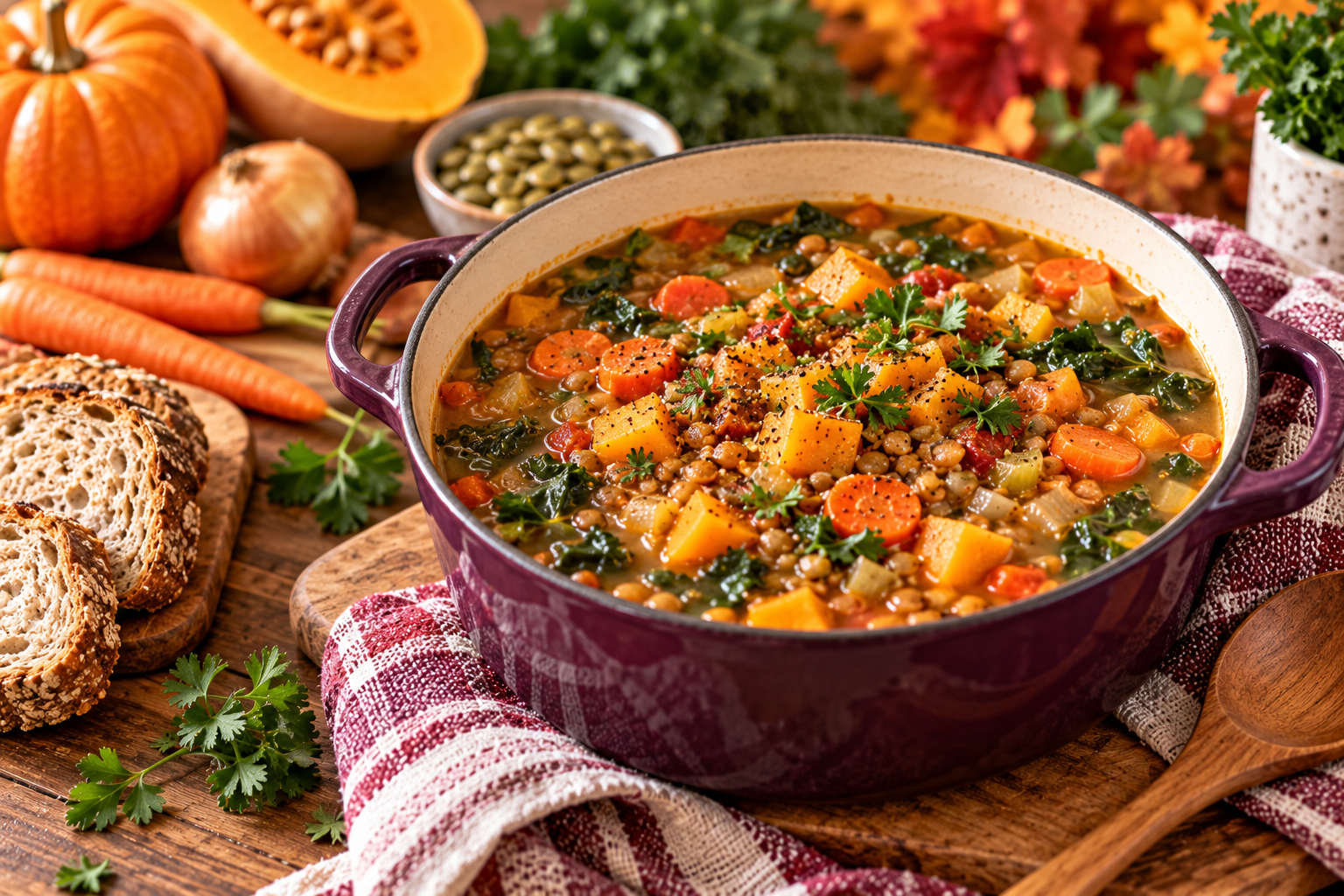
You don’t need seven completely different “healthy recipes” this week.
Roast a tray of squash and sweet potatoes and use them in several meals.
Make a pot of lentil soup and enjoy the leftovers.
Cook extra quinoa or another whole grain.
Keep apples, nuts and yogurt available for quick snacks.
Make nourishment easier, not more elaborate.
Because when we’re already tired, hungry and busy, the meal requiring seventeen ingredients and forty-five minutes of chopping probably isn’t the meal we’re going to make.
And that’s okay.
What If You’re Still Exhausted?
Food matters, but it’s important not to turn nutrition into the explanation for every symptom we experience.
Persistent or worsening fatigue can have many causes.
Sleep problems, iron deficiency, thyroid issues, medication effects, mood changes, sleep apnea and other medical conditions can all affect energy, as can hormonal changes during the menopause transition.
If your fatigue is persistent, unusual, worsening or interfering with your daily life, please don’t simply assume:
“Well, I’m getting older.”
Talk with your healthcare provider and advocate for a proper evaluation.
Your body deserves curiosity, not dismissal.
Your October Energy Edit Can Start on Your Plate
Throughout October, we’ve been looking at where our energy goes—what drains it, what restores it and what we may want to do differently.
Food is only one part of that picture.
But it’s an important one.
And your Energy Edit doesn’t necessarily have to begin by taking something away.
Sometimes it begins by adding what your body has been asking for.
- More nourishment.
- More color.
- More protein.
- More fiber.
- More satisfying meals.
- More foods you genuinely enjoy.
And perhaps a little less time worrying about whether a sweet potato is going to ruin everything. 😂🍠
This week, instead of asking:
“What should I stop eating?”
try asking:
“What could I add to my plate to help me feel more nourished?”
That one question can create a very different relationship with food—and with your body.
💜 Ready to Discover Where Your Energy Is Going?💜

Ready to Do Your Own Energy Edit?
I’ve created a complimentary October Energy Edit to help you take a closer look at what’s draining your energy, what restores it and where a few realistic changes might make a difference.
Inside, you’ll find your Energy Snapshot, Energy Budget, seasonal nourishment ideas, your “More Me” list and space to decide what you’d like to keep, release and make more room for.
No complete life overhaul required. 💜
👉Get your free October Energy Edit >>here
And if you know another woman who’s been running on empty lately, feel free to share this with her too. 💜
Come Join Us This October

You Don’t Have to Navigate Midlife Alone
If you’re craving practical wellness support, honest conversation and a community of women who understand that midlife can sometimes feel like a lot, I’d love to welcome you inside the Energized Healthy Women’s Club.
It’s a warm, private community for women 40+ where we talk openly about energy, hormones, sleep, nourishment, stress, movement, healthy aging—and all those everyday things that can affect how we feel in this season of life.
This October, we’re doing an Energy Edit. 🍂
We’re looking at what may be quietly draining our energy, what helps restore it, how seasonal nourishment can support us, and the small, realistic shifts that can help us feel more energized and more like ourselves—without trying to overhaul our entire lives.
There’s no pressure to have it all figured out. Come as you are, bring your questions, experiences and wonderfully imperfect self. We’d love to have you with us. 💜
Join us inside the Energized Healthy Women’s Club here: https://www.facebook.com/groups/energized.healthy.women