
When you think about healthy aging, what comes to mind?
Perhaps it is eating nourishing food, staying active, supporting your heart, getting enough sleep or remembering to take those supplements you bought with the very best intentions. Those things can matter. But there is another part of healthy aging that often receives far less attention: joy.
Joy may sound like a lovely extra to enjoy after all the serious wellness habits are handled. Yet laughter, pleasure, connection and play can influence how we manage stress, relate to other people and care for ourselves. They help make life feel worth participating in, rather than turning wellness into another full-time job.
That matters in midlife. Many women are carrying demanding schedules, changing family roles, work pressures, caregiving, disrupted sleep and bodies that may feel unfamiliar. It is easy for enjoyment to slip to the bottom of the list. We promise ourselves we will make room for it when everything else is finished, which usually means sometime around never.
Healthy aging is about more than adding years to life. It is also about protecting the energy, connection and curiosity that help us enjoy those years. Here are seven ways joy and laughter may support that process, along with simple ways to invite more of both into an ordinary day.
Joy Can Help Your Body Shift Out of Stress Mode
Stress isn’t always harmful. A short burst can help us respond to a challenge. The difficulty comes when the body rarely receives the message that the challenge has passed.
In midlife, the stress load may come from many directions at once. You may be answering work messages, worrying about an aging parent, supporting adult children, coping with poor sleep and wondering why you walked into the kitchen. Again.
Laughter can create a brief interruption in that tension. Studies of laughter and humor suggest they may help reduce perceived stress and encourage physical relaxation. One laugh will not erase a demanding season, of course, but moments of genuine amusement can give the nervous system a chance to soften.
Try this: Keep a short list of reliable mood lifters. It might include a favorite British comedy, a funny podcast, animal videos or the friend who can make you laugh at the most ridiculous things. Use the list before you are completely depleted, not only after a hard day has taken everything out of you.
Laughter Can Strengthen Social Connection
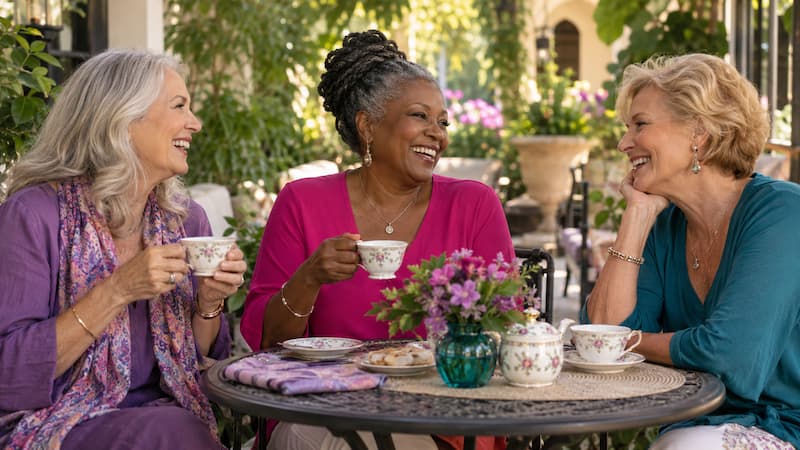
Some of our best laughter happens with other people. It is the shared look across a room, the old family story everyone knows by heart or the message from a friend that arrives at exactly the right moment.
Social connection is an important part of well-being as we age. Regular contact with people who make us feel safe, seen and welcome can provide emotional support and a sense of belonging. Laughter often makes that connection easier because it lowers the temperature in the room. It reminds us that we do not have to be polished or serious every minute.
This does not mean forcing yourself into a packed social calendar, especially if crowds leave you drained. One warm conversation can be more nourishing than an entire room of small talk.
Try this: Send someone a memory that still makes you smile, arrange tea with a friend or share something funny with a person who understands your sense of humor. Small points of connection count.
Enjoyment Can Make Movement Feel More Natural
Movement is essential for strength, mobility, balance and independence, but it’s difficult to stay consistent with activity that feels like punishment.
Joy changes the experience. Dancing in the kitchen, walking somewhere beautiful, gardening, playing with grandchildren or taking a class with a friend still asks your muscles and joints to move. The difference is that your attention is not fixed on completing a workout or burning a certain number of calories. You are participating in something you enjoy.
That pleasure matters because we are more likely to return to activities that feel good and fit our lives. The most impressive exercise plan on paper is not especially useful if you dread it so much that it never leaves the paper.
Try this: Ask yourself, What kind of movement did I enjoy before exercise became something I thought I should do? Choose ten minutes of that. Put on one song, take the scenic route or stretch outside while the kettle boils.
Humor May Give the Brain a Helpful Change of Pace

Humor asks the brain to notice surprise, make connections and shift perspective. A punchline works because the mind expects one thing and receives another. That little mental turn can be both enjoyable and stimulating.
Small studies have explored whether humor and laughter may support short-term memory, partly through their relationship with stress. We should not treat laughter as a cure for memory problems, but it may offer the brain a welcome break from pressure. That’s useful when stress itself is making concentration feel harder.
This can be particularly reassuring in midlife, when brain fog may turn a forgotten name or misplaced phone into a frightening story about decline. Sometimes the brain is tired, distracted or overloaded. Responding with a little gentleness is often more helpful than criticizing yourself.
Try this: Add something playful to a mentally demanding task. Use colored pens, work beside a sunny window, listen to light music or take a short humor break before returning. If changes in memory are persistent, worsening or interfering with daily life, speak with your healthcare provider.
Joy Can Build Emotional Resilience
Resilience doesn’t mean staying cheerful while difficult things happen. It means having enough emotional flexibility to experience more than one feeling at a time.
You can be worried about someone you love and still laugh over lunch. You can be grieving a change and notice a beautiful sunset. You can have a hard week and enjoy an hour of music. The lighter moment doesn’t cancel the harder one. It gives you another place to stand for a little while.
This matters because many women feel guilty enjoying themselves when life is complicated. But joy is not evidence that you don’t care. It can help replenish the emotional energy needed to keep caring without losing yourself completely.
Try this: At the end of the day, ask, What felt good today, even briefly? Your answer does not need to be profound. A hot cup of tea, a kind message or five quiet minutes in the garden is enough.
Playfulness Can Reawaken Curiosity and Purpose
Midlife often changes the roles that once organized our days. Children grow, relationships shift, careers evolve and priorities look different. Even welcome changes can leave us wondering what comes next.
Play and curiosity give us a low-pressure way to explore that question. Trying a recipe, visiting a new walking trail, learning a creative skill or returning to something you loved years ago can reveal interests that were buried beneath responsibility.
Purpose doesn’t have to arrive as one grand mission. It can grow through the people, activities and causes that make you want to stay engaged with life. Curiosity keeps the door open.
Try this: Finish this sentence: I have always wondered what it would be like to… Choose an answer that feels interesting rather than sensible, then identify the smallest way to explore it.
Pleasure Can Make Healthy Habits Easier to Sustain
Wellness advice often focuses on discipline. Set the alarm. Follow the plan. Track the numbers. Push through. Discipline has its place, but it’s a shaky foundation when every healthy choice feels like another obligation.
Pleasure helps healthy habits feel like care. A nourishing lunch is easier to repeat when it tastes delicious. A walk becomes inviting when it includes sunshine and a friend. An earlier bedtime feels less restrictive when it begins with a comforting evening ritual.
This doesn’t mean every supportive habit must be exciting. Brushing our teeth rarely becomes the highlight of the day. It means we can stop assuming that something must feel difficult, joyless or punishing before it counts.
Try this: Choose one habit you want to support and ask, How could I make this more enjoyable? Use your favorite mug, buy the flowers, play the music or invite someone along. Small details can change how a habit feels.
Joy Doesn’t Need to Become Another Assignment
There’s a small trap here. We can read an article about joy and immediately create a seven-step joy schedule with reminders, color coding and a brand-new notebook. Suddenly, even fun has performance goals.
You don’t need to manufacture happiness or feel upbeat all the time. Life includes sadness, anger, fatigue, worry and loss. If you’re struggling with persistent low mood, loss of interest, anxiety or a sense that you can’t cope, please reach out to a qualified healthcare or mental health professional. Support matters.
For most of us, making room for joy can be much simpler. Notice what lightens you. Notice who helps you feel more like yourself. Notice the moments when you become so absorbed in something lovely that you forget to check the time.
Then make one of those moments a little easier to find again.
A Gentle Joy Experiment for This Week

Choose one idea from this list and try it once:
- Listen to a song that changes your mood within the first few notes.
- Call or message someone who makes you laugh.
- Spend ten minutes doing something creative with no useful outcome required.
- Move your body in a way that feels playful or freeing.
- Notice one ordinary pleasure and give it your full attention.
Pay attention to how you feel before, during and afterward. You are not measuring success. You are gathering information about what supports you.
Healthy Aging Can Include More of What Makes Life Feel Good
Joy will not replace nourishing food, movement, sleep, medical care or the many other pieces of healthy aging. It belongs beside them.
A life filled only with responsible choices may look healthy from the outside while feeling rather empty on the inside. Laughter, friendship, beauty, play and purpose remind us why we are caring for ourselves in the first place.
So perhaps the question isn’t whether you have earned a little fun after everything is done. Perhaps it’s this: What small spark of joy would help you feel more alive today?
My free guide, Strong Energized and Thriving, includes a personal Joy Menu, a 7 Day Joy Spark Challenge, a Midlife Energy Audit, practical healthy aging tools and nourishing recipes. Download your free copy below.
Come Join Us This September

You Don’t Have to Navigate Midlife Alone
If you’re craving practical wellness support, honest conversation and the reassurance that other women understand what you’re experiencing, come join us inside The Energized Healthy Women’s Club.
It’s a welcoming private community where women can talk openly about energy, hormones, sleep, nourishment, stress, healthy aging and the realities of life in midlife—without judgment or pressure to be perfect.
This September, we’re reimagining healthy aging through strength, joy, curiosity, connection and purpose.
Come as you are. Bring your questions, experiences and wonderfully imperfect self. We’d love to welcome you. 💜
👉 Join us inside the Energized Healthy Women’s Club here: https://www.facebook.com/groups/energized.healthy.women
💜 Your Free Healthy-Aging Guide 💜

Healthy aging isn’t about trying to turn back the clock or become the woman you were 20 years ago.
It’s about supporting the woman you are today—with more energy, joy, confidence and curiosity for everything still ahead. 💜
That’s why I created my new free eGuide:
Strong, Energized & Thriving: A Midlife Woman’s Guide to Healthy Aging With More Energy, Joy and Purpose
Inside, you’ll find:
💜 A Midlife Energy Audit
💗 Five gentle ways to protect your energy
💚 A Personal Joy Menu
✨ A 7-Day Joy Spark Challenge
🧠 Practical ways to support memory and focus
🌿 Reflection pages for connection, curiosity and purpose
✅ A printable healthy-aging tracker
🥗 Three delicious recipes for midlife vitality
This isn’t another guide filled with rigid rules or a long list of things you’re supposed to do perfectly. It’s a warm, practical resource to help you notice what your body and mind need—and begin with one manageable step.
Ready to feel strong, energized and fully engaged in the life you’re living?