
Have you ever caught yourself thinking, “I’m eating the same way I always have, so why does my body seem to be reacting completely differently?”
Perhaps the breakfast that once carried you comfortably until lunch now leaves you hungry an hour later. Maybe your afternoon energy disappears, sugar cravings arrive with tremendous enthusiasm, or the weight around your middle seems much more determined to stay than it used to be.
And then there’s that familiar advice to “just eat less and exercise more,” as though your body were a calculator and you’d simply forgotten how to press the correct buttons.
Metabolism after 40 is more complicated—and far more individual—than that.
My own journey through a hysterectomy and, later, the removal of my ovaries taught me how unsettling it can feel when your body changes in ways you didn’t expect. When hormones shift, sleep becomes less predictable, stress feels harder to shake, and your energy no longer responds as it once did, it’s easy to wonder whether you’re doing something wrong.
But your body isn’t failing you.
Midlife brings hormonal changes, but it also arrives alongside the natural effects of aging, possible muscle loss, changing activity levels, disrupted sleep, stress, medications, and years of caring for everyone else before caring for ourselves.
Supporting metabolism after 40 isn’t about forcing your body back to the way it was at 25. It’s about understanding the body you have now and giving it the nourishment, movement, rest, and support it needs.
What Does Blood Sugar Have to Do With Metabolism?
When we eat carbohydrates, our digestive system breaks many of them down into glucose. That glucose enters the bloodstream and becomes an important source of energy.
In response, the pancreas releases insulin. You can think of insulin as a key that helps move glucose from the blood into our cells, where it can be used for energy.
When cells become less responsive to insulin, the body may need to produce more of it to accomplish the same job. This is known as insulin resistance. Over time, blood sugar may rise, increasing the risk of prediabetes and type 2 diabetes.
Prediabetes often has no obvious symptoms. According to the CDC, many adults who have it don’t know it, which is one reason appropriate screening and regular healthcare visits matter. The CDC explains insulin resistance and prediabetes here.
That doesn’t mean every afternoon energy dip or sugar craving indicates insulin resistance. Fatigue, cravings, irritability, and brain fog can have many possible causes, including inadequate nourishment, dehydration, stress, poor sleep, medication effects, thyroid concerns, anemia, and other health conditions.
But these experiences can still provide useful information. They give us an opportunity to look at our daily patterns and ask what might help us feel steadier and better supported.
Here are seven powerful—but realistic—ways to support blood sugar, energy, and metabolism after 40.
1. Begin the Day With a More Satisfying Breakfast
Breakfast doesn’t have to be enormous, and you don’t have to eat the moment you open your eyes.
But if your usual morning consists of coffee, a piece of toast, or a sweet pastry—and you’re hungry, shaky, irritable, or hunting for sugar two hours later—it may be time to experiment with a different combination.
Try building breakfast around protein, then adding fiber-rich carbohydrates and healthy fat.
For example:
- Eggs with vegetables and whole-grain toast
- Greek yogurt with berries, chia seeds, and walnuts
- Oatmeal with nut butter, seeds, and fruit
- Cottage cheese with berries and ground flaxseed
- A smoothie made with protein, leafy greens, berries, and healthy fat
- Leftovers from dinner—because there’s no rule that breakfast must look like breakfast food
Protein helps make a meal more satisfying and supports the muscle that becomes increasingly important as we age. Fiber and healthy fats can also give a meal more staying power.
This doesn’t mean you have to ban the toast or give up a favorite breakfast. Instead, think about what you could add.
Could you add an egg to your toast? Some yogurt beside your fruit? Nuts or seeds to your oatmeal?
If you aren’t usually hungry in the morning, pay attention rather than forcing yourself to follow someone else’s schedule. Notice when hunger naturally arrives and what happens to your energy after you eat.
The goal isn’t to obey a breakfast rule. It’s to discover which morning pattern helps you feel your best.
2. Use a Simple Balanced-Plate Formula

You don’t need to weigh every ingredient or calculate complicated ratios to build a supportive meal.
A simple starting point is:
- Half the plate: non-starchy vegetables
- One-quarter: protein
- One-quarter: fiber-rich carbohydrates
- A small amount of satisfying fat
The National Institute of Diabetes and Digestive and Kidney Diseases uses a similar plate method in its diabetes education: half non-starchy vegetables, one-quarter protein, and one-quarter higher-fiber carbohydrate foods. You can see its plate guidance here.
In real life, this might look like:
- Salmon, roasted vegetables, and a small baked potato
- Chicken, a colorful salad, quinoa, and olive-oil dressing
- Tofu or beans with stir-fried vegetables and brown rice
- Turkey chili with beans and a side salad
- A vegetable omelet with fruit and whole-grain toast
Not every meal will fit perfectly onto a neatly divided plate. Soups, casseroles, sandwiches, and restaurant meals don’t always cooperate with tidy diagrams.
That’s perfectly okay.
The formula is a guide, not a test.
Rather than trying to create a flawless plate, ask whether your meal contains protein, fiber, color, and enough food to leave you satisfied.
If it does, you’re building a helpful foundation.
3. Pair Carbohydrates Instead of Fearing Them
Carbohydrates have acquired a rather dramatic reputation.
One minute, a banana is a nutritious fruit; the next, social media is treating it like a dangerous substance that requires a warning label.
Carbohydrates aren’t automatically the enemy.
Fruits, beans, lentils, vegetables, dairy foods, and whole grains all contain carbohydrates—and many also provide fiber, vitamins, minerals, and other valuable nutrients.
Instead of automatically eliminating carbohydrates, experiment with pairing them with protein, fiber, or healthy fat.
For example:
- An apple with peanut or almond butter
- Berries with Greek yogurt
- Whole-grain crackers with tuna or cheese
- A banana with walnuts
- Oatmeal with protein and seeds
- Toast with egg and avocado
- Hummus with vegetables and whole-grain crackers
Pairing creates a more complete and satisfying snack or meal. It may also help you avoid the “I ate something, but somehow I’m still hungry” experience.
This approach also allows food to remain enjoyable and flexible. You don’t have to become afraid of fruit, bread, potatoes, or other carbohydrate-containing foods to support your health.
If you live with diabetes, take blood-sugar-lowering medication, or have received individualized dietary advice, follow your healthcare professional’s guidance. Your needs may be different from general wellness recommendations.
4. Add Fiber and Color Gradually
Fiber supports digestive health, helps meals feel satisfying, and is found in many foods that also provide vitamins, minerals, and beneficial plant compounds.
Helpful sources include:
- Vegetables
- Berries and other fruits
- Beans and lentils
- Nuts and seeds
- Oats
- Quinoa and other whole grains
- Chia seeds
- Ground flaxseed
You don’t need to transform a beige plate into a farmers’ market overnight. Begin by adding one color.
Add berries to breakfast. Put leafy greens into a sandwich. Add frozen vegetables to soup. Include beans in a salad. Keep washed fruit somewhere you can actually see it—because produce hidden in the bottom drawer has a remarkable ability to disappear from memory until it’s no longer recognizable. 😂
Frozen vegetables and fruit count too. They’re convenient, often economical, and useful when fresh produce has mysteriously gone from “not quite ripe” to “far too ripe” within about twelve minutes.
If you currently eat very little fiber, increase it gradually and drink enough fluid. A sudden dramatic increase can leave your digestive system filing a formal complaint.
The goal is progress, not digestive chaos.
5. Move After Meals—and Protect Your Muscle

Physical activity helps the body use glucose and can improve insulin sensitivity. It also supports cardiovascular health, mood, mobility, sleep, balance, and independence.
That doesn’t mean you need to complete a punishing workout every time you eat.
Try taking a short walk after lunch or dinner. Clear the kitchen while moving with intention. Walk around the block, play with the grandchildren, tend the garden, or put on one song and move.
Short “movement snacks” throughout the day count too.
Try:
- A five- or ten-minute walk
- Standing and sitting from a chair several times
- Gentle shoulder rolls and stretching
- Supported calf raises
- Walking while talking on the phone
- Moving to one favorite song
- Breaking up a long period of sitting
Your body doesn’t refuse the benefits because you weren’t wearing workout clothes.
Strength training is particularly valuable after 40 because muscle is essential for strength, balance, bone support, everyday function, and metabolic health.
Resistance bands, hand weights, exercise machines, and body-weight movements can all help. Begin at an appropriate level and seek professional guidance if you have pain, balance concerns, osteoporosis, or another condition that affects exercise safety.
Current CDC guidance recommends that adults work toward at least 150 minutes of moderate aerobic activity each week, along with muscle-strengthening activity on at least two days. That’s a long-term guideline—not a demand that you achieve it perfectly next Monday. The CDC’s current physical activity guidance is available here.
Begin where you are.
Ten minutes is more than zero, and consistency matters more than an occasional burst of exhausting enthusiasm.
6. Remember That Sleep, Stress, and Hydration Count Too

Blood sugar and metabolism aren’t influenced by food alone.
The CDC notes that stress can raise blood sugar and that even one night of too little sleep can affect how effectively the body uses insulin. Dehydration can also make blood glucose more concentrated. . The CDC describes these and other possible blood sugar influences here.
Of course, knowing that sleep matters doesn’t magically stop a night sweat or prevent your brain from holding a committee meeting at 3 a.m.
But it does remind us that fatigue and cravings aren’t necessarily a character flaw.
After a poor night’s sleep, you may naturally want more caffeine, sugar, or quick-energy foods. You may also have less motivation to cook, move, or make decisions.
That isn’t a failure of willpower. It’s a tired body looking for energy.
Rather than criticizing yourself, make the next choice easier:
- Keep simple protein-rich foods available.
- Prepare an easy lunch before you become ravenously hungry.
- Drink water consistently throughout the day.
- Move caffeine earlier if it affects your sleep.
- Dim lights and reduce stimulating screen use before bed.
- Take a short walk or practice slow breathing when stress builds.
- Ask for help rather than carrying everything alone.
- Give yourself permission to rest.
Wellness is connected.
Supporting sleep and stress may make nourishing choices easier, while regular meals, hydration, and movement may also support energy and rest.
This is why focusing on only one part of wellness rarely tells the whole story.
7. Know Your Numbers—and Keep Asking Questions
You can’t determine whether you have prediabetes from cravings, fatigue, or stubborn weight alone.
A healthcare professional may use an A1C test, fasting blood glucose, or an oral glucose tolerance test to identify prediabetes or diabetes.
The A1C test reflects your average blood glucose over approximately the previous three months. It can be a helpful screening tool, although certain medical conditions can affect its accuracy. NIDDK explains the A1C test and its limitations here.
Consider asking your healthcare provider:
- Have my fasting glucose and A1C been checked recently?
- What were my actual results?
- Have those numbers changed over time?
- Do I have risk factors that suggest additional testing?
- Could a medication or health condition be affecting my energy or blood sugar?
- Are there other tests that would help explain my symptoms?
- Would working with a registered dietitian or another qualified professional be helpful?
Ask for copies of your results and keep them for your own records. A result that falls within a laboratory reference range is one piece of information, but looking at patterns over time can also be helpful.
“Normal” doesn’t always explain how you feel, but it’s equally important not to assume that every symptom is caused by hormones, cortisol, insulin resistance, or blood sugar.
Persistent symptoms deserve a thoughtful evaluation—not dismissal and not guesswork.
Choose One Powerful Experiment
After reading the seven strategies, the temptation may be to begin all seven tomorrow.
Please don’t.
Trying to change everything at once usually creates more stress—and stress isn’t exactly what we’re trying to add to the wellness plan.
Instead, choose one experiment for the coming week:
- Add protein to breakfast.
- Include a vegetable with lunch.
- Pair your afternoon fruit with nuts or yogurt.
- Walk for ten minutes after dinner.
- Add one simple strength session.
- Begin winding down 15 minutes earlier.
- Schedule an appointment to discuss your blood sugar results.
Then notice what happens.
How is your energy?
Are you satisfied longer after meals?
Do your cravings feel different?
Is your mood steadier?
Are you sleeping any better?
Does the action feel realistic enough to continue?
This is curiosity, not judgment.
A choice doesn’t need to produce a dramatic overnight change to be valuable. Sometimes the first improvement is simply becoming more aware of what helps your body feel supported.
Your Body Isn’t the Enemy
Wellness after 40 isn’t about shrinking yourself, punishing your body, or desperately trying to return to a younger version of you.
It’s about protecting your energy, strength, health, confidence, and freedom for the years ahead.
Some days, that may look like a colorful, balanced meal followed by a walk. On other days, it may look like eating the simplest nourishing food available and going to bed early.
Both count.
Your metabolism doesn’t need another extreme plan. Your body needs consistent nourishment, meaningful movement, restorative rest, appropriate medical care, and a great deal more kindness than diet culture has ever offered it.
These strategies are powerful because they work together—and because they’re realistic enough to become part of everyday life.
A satisfying breakfast can support steadier energy. Steadier energy can make movement feel more possible. Movement can support sleep and stress relief. Better rest can make tomorrow’s choices feel less difficult.
You don’t have to do everything.
Choose one supportive step, notice what your body tells you, and build from there.
That’s how sustainable wellness begins—not with perfection, but with partnership.
Come Join Us This August

August is National Wellness Month—and it’s the perfect time to pause and ask a question we don’t always make time for:
How am I really feeling?
Not how you think you should feel.
Not how you tell everyone else you’re feeling.
But how your energy, body, sleep, mood, and stress levels are actually doing.
Because midlife can bring plenty of changes.
Maybe your metabolism seems to have rewritten its own rulebook. Your energy rises and falls throughout the day, your joints feel stiffer, sleep has become a nightly guessing game, or your emotional plate is so full that you’re considering applying for an extension. 😄
If you’ve been feeling tired, achy, restless, overwhelmed, foggy, craving sugar, waking at 3 a.m., or simply not quite like yourself…
This month inside the Energized Healthy Women’s Club is for you. 💜
And YOU’RE invited to join us.
Our August theme is:
💜 Midlife Wellness from the Inside Out 💜
Small, supportive choices for your metabolism, movement, sleep, and emotional well-being.
This isn’t about creating a flawless wellness routine.
It’s not about completely overhauling your diet, exercising for hours, sleeping perfectly every night, or saying no to everyone who dares to ask you for anything.
And it’s definitely not about adding seventeen new things to your already-full plate.
It’s about understanding how the different parts of your wellness are connected—and learning how to support yourself with more curiosity, kindness, and practical choices.
Throughout August, we’ll be exploring:
🔹 Why metabolism and energy can feel different after 40
🔹 Simple ways to build a more balanced and satisfying plate
🔹 Blood sugar clues we sometimes overlook
🔹 Gentle movement that supports joints, muscles, and bones
🔹 Why walking and strength training both matter
🔹 The frustrating 3 a.m. wake-up
🔹 Natural ways to support your sleep rhythm
🔹 How stress can show up throughout the body
🔹 Why saying no can be an important act of wellness
🔹 Small choices that help you feel stronger, calmer, and more supported
I’ve also created a special Midlife Wellness Check-In to help you reflect on your metabolism, movement, sleep, and emotional well-being.
It isn’t a scorecard, and there’s no passing or failing.
It’s simply a way to notice what’s already going well, which area may be quietly asking for more care, and one gentle action you can take next.
Because wellness doesn’t have to begin with a dramatic transformation.
Small choices may not look impressive from the outside, but they can create meaningful changes in how you feel.
You don’t have to do everything.
You don’t have to be perfect.
And you certainly don’t have to figure out midlife alone.
Inside the Energized Healthy Women’s Club, you’ll find encouragement, practical wellness education, honest conversations, gentle accountability, and a community of women who truly understand that midlife can be beautiful, bewildering, exhausting, empowering—and occasionally all four before lunchtime. 😄
If you’re ready to support your wellness from the inside out, we would absolutely love to welcome you. 💜
👉 Join us inside the Energized Healthy Women’s Club here: https://www.facebook.com/groups/energized.healthy.women
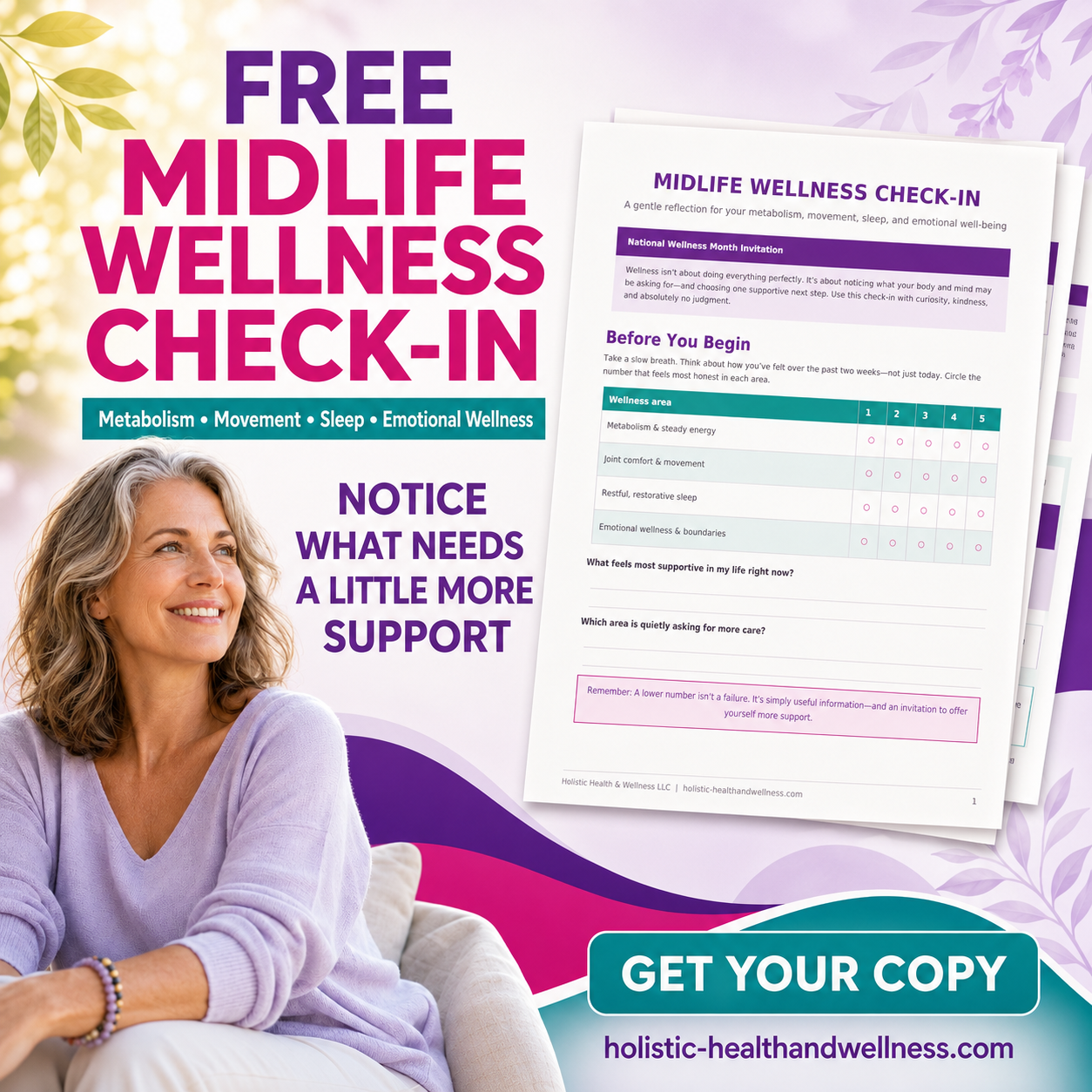
💜 YOUR FREE MIDLIFE WELLNESS CHECK-IN IS HERE! 💜
When was the last time you paused and asked yourself:
How am I really feeling?
Not how you think you should feel—and not the quick “I’m fine” answer we sometimes give when life is busy.
I mean how your energy, movement, sleep, and emotional well-being are actually feeling right now.
To help you do that, I’ve created a beautiful Midlife Wellness Check-In for National Wellness Month. 🌿
This gentle four-page reflection will help you explore:
💜 Metabolism and steady energy
💚 Joint comfort and movement
🩷 Restful, restorative sleep
💜 Emotional wellness and boundaries
You’ll be able to notice what’s already supporting you, identify which area may be quietly asking for more care, and choose one realistic wellness action to try.
There’s also a simple seven-day Week of Noticing tracker to help you pay attention to how that small choice makes you feel.
This isn’t a test or another scorecard.
There’s no passing, failing, guilt, or expectation that you suddenly change everything at once.
It’s simply an invitation to pause, listen to your body, and respond with a little more curiosity and kindness.
Because sometimes the most powerful next step isn’t doing more.
It’s noticing what you need. 💜
👉 Download your free Midlife Wellness Check-In >>HERE.<<
Once you’ve completed it, I’d love to know:
Which area are you choosing to support—metabolism, movement, sleep, or emotional wellness?